The Full Picture

The Big Picture · Discussion · Interview

The Triumph of ‘The Brutalist,’ With Adrien Brody and Brady Corbet

December 31, 2024/ 155 min/ Sean Fennessey · Adam Nayman

Sean Fennessey's last episode of 2024, given over entirely to 'The Brutalist': a long argument about the film with critic Adam Nayman, then separate interviews with director Brady Corbet and star Adrien Brody.

16 films across 3 segments.

AI-generated This episode was transcribed and analyzed with AI models. The matches aren't perfect — expect the occasional misheard title or a link to the wrong film.

‘The Brutalist’Sean Fennessey and Adam Nayman

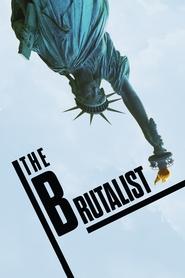
The Brutalist poster

The Brutalist 2024

Corbet's third feature, co-written with Mona Fastvold, shot by Lol Crawley on 35mm VistaVision and projected in 70mm, the first American film shot in the format since roughly 1961. Adrien Brody plays László Tóth, a Hungarian-Jewish architect and Holocaust survivor taken up by industrialist Harrison Lee Van Buren (Guy Pearce). Sean calls it his favorite film of 2024 and floats it as a 'micro-epic,' a single-person character study at monumental scale. Nayman is more skeptical: he admires the first half's power (the Van Buren/Tóth dynamic, the library reveal) but finds the second half schematic, its shocks predictable, and worries the movie is celebrated in proportion to how fetishized its format-and-projection story is. They spar over Manny Farber's white-elephant vs. termite art, the film's Zionist-inflected epilogue at the Venice Biennale, and whether a movie can be canonized the week it opens.
There Will Be Blood poster

There Will Be Blood 2007

The recurring touchstone. Both hear Paul Thomas Anderson all over the movie: Van Buren as a Daniel Plainview figure, the flat American landscape waiting to be built on, though they note 'The Brutalist' is tighter and less antic than Anderson's work.

The Master poster

The Master 2012

Nayman's counter-example: a film he's 'pretty sure' he knows what it's about, all connective tissue, where women are a structuring absence. He sets it against 'The Brutalist,' which he finds built for you to project meaning into.

The Conformist poster

The Conformist 1970

Sean's model for the 'micro-epic': Bertolucci's small-scale character study that crosses borders and tells a big story about fascism, an obvious influence on the film's look and shape.

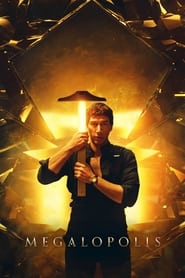
Megalopolis poster

Megalopolis 2024

The year's other architect movie. Nayman contrasts Coppola's 'I alone can build it' with Corbet's pragmatic view that the artist needs money and patrons, often unethical, violent ones, to make anything at all.

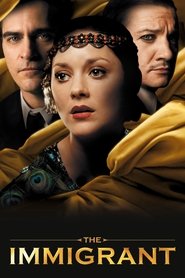
The Immigrant poster

The Immigrant 2013

James Gray's film as the missing step between 'The Godfather Part II' and this movie's inverted Statue of Liberty shot. Nayman likes Gray's version more.

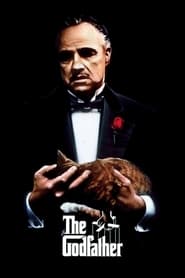
The Godfather poster

The Godfather 1972

The canon-protection anxiety made explicit: does 'The Brutalist' stack up, and is that even the point? Nayman argues critics guard the canon less against the film than against films that try to sneak in the day they open.

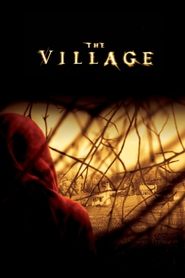
The Village poster

The Village 2004

A tangent off the Pennsylvania setting: M. Night Shyamalan as the great Philadelphia filmmaker, and, as Sean notes, an Adrien Brody film too.

Carry On poster

Carry On 2024

The termite-vs-elephant foil: the Jaume Collet-Serra Netflix thriller cost more than 'The Brutalist,' and Nayman half-defends it as top-five streaming of the year, a small movie doing its job while the elephant insists on itself.

Brady Corbet

The Brutalist poster
Brady Corbet on

The Brutalist 2024

Corbet on getting it made for about $10 million with final cut intact: a self-selecting, antagonist-free set of financiers, because the script (170 pages, a scripted intermission) scared everyone else off. He talks about the two-part structure as classical American optimism giving way to pessimism, counter-movement in the camera (racing forward while zooming out), the Carrara marble sequence going deliberately liquid and nightmarish, and shooting the Venice epilogue first, in 2020, on 35mm during COVID with empty San Marco square. He resists reducing Van Buren to a single real-world model and insists all history is fictionalized, citing Angela's Ashes and the James Frey and JT LeRoy scandals.

The Childhood of a Leader poster
Brady Corbet on

The Childhood of a Leader 2015

His debut feature, which he revisited the night before: the upward shot at a circular glass ceiling echoes into the new film. Also a post-war picture (World War I / the interwar years), part of a continuing interest in how the present moment came to be.

Vox Lux poster
Brady Corbet on

Vox Lux 2018

His pop-star film, which he says attracted people 'for the wrong reasons,' unlike the more obviously self-selecting 'Brutalist.'

The World to Come poster
Brady Corbet on

The World to Come 2020

Mona Fastvold's film, whose Venice premiere (the only festival to proceed that COVID year) put Corbet and DP André Chemetoff in the city to grab the establishing footage that ends 'The Brutalist.'

Dahomey poster
Brady Corbet on

Dahomey 2024

His last-great-thing pick: Mati Diop's 68-minute documentary, which he calls the film that left him most exalted this year, a Frantz Fanon-inflected work on colonialism that, for one Frederick Wiseman-caliber sequence, demands a theater. (Diop is a friend, he discloses.)

Adrien Brody

The Brutalist poster
Adrien Brody on

The Brutalist 2024

Brody on his personal way in: his mother, the photographer Sylvia Plachy, is a Hungarian immigrant whose parents fled Budapest during the 1956 revolution through Vienna, so the film's account of assimilation and the myth of the American dream landed directly. He talks about the charged, Salieri-and-Mozart dynamic with Guy Pearce, the diner scene where Van Buren returns the images of Tóth's lost buildings, and acting for the horizontally-mounted VistaVision camera, an analog rig that 'sounds like a sewing machine,' shot handheld for the intimate close-ups. He credits Corbet with a calm, respectful set, unusually free of the suffering he'd been taught was the price of great work.

The Pianist poster
Adrien Brody on

The Pianist 2002

The obvious precedent, which he says opened his eyes and deepened his understanding of the past he draws on here, while insisting the two films are very different and that he'd worked hard to avoid parts too close to it before this one came along.

Also mentioned raised along the way

Corbet's cinephile north stars Come and SeeAndrei Rublev2001: A Space OdysseySolaris

Corbet the actor Funny GamesMelancholia

The canon in the room Citizen KaneThe Godfather Part IIRocco and His BrothersThe LeopardBoogie NightsMagnolia

Exile and credit-song echoes PhoenixBlack BookBarbaraTransit

Also mentioned The ShroudsOppenheimerWickedAnoraEmilia PérezNo Country for Old Men

Not films filtered out: TV, games, ads

TV Mildred Pierce (Todd Haynes miniseries)

Ads TremfyaAccentureNOS EnergyFanDuelWhole Foods MarketT-Mobile Home Run Derby (Netflix)60 Songs That Explain the '90s