The Favourite 2018
Olivia Colman won Best Actress, one of the night's few breaks from the established Oscar frontrunners.
The Big Picture · Discussion · Interview
February 12, 2019/ 92 min/ Sean Fennessey · Amanda Dobbins
Sean and Amanda break down a very British BAFTAs night, the Academy's plan to cut four categories from the Oscar telecast, and the screenplay races. Then composer Nicholas Britell joins to talk scoring Moonlight, Beale Street, and Succession.
58 films across 6 segments.
AI-generated This episode was transcribed and analyzed with AI models. The matches aren't perfect — expect the occasional misheard title or a link to the wrong film.
The BAFTAsa very British night at the British Oscars
Olivia Colman won Best Actress, one of the night's few breaks from the established Oscar frontrunners.
Rachel Weisz won Best Supporting Actress, historically one of the hardest BAFTA categories to read as an Oscar signal.
Rami Malek's Best Actor win is starting to crystallize a race the hosts say they've been through the seven stages of grief with; it's nominally a film about British people and Freddie Mercury's Live Aid legacy.
Won Best Film, which the hosts read as the clearest sign yet that it's the Oscar frontrunner, even without a Golden Globes-eligible run to point to.
The precedent for how often BAFTA rewards its own: Dev Patel won an acting BAFTA for it in 2016, a performance that got little traction stateside.
Last year's inevitable Best Picture winner, the comparison point for whether Roma's frontrunner status is as locked.

Last year's BAFTA Best Film upset, despite being written and directed by a British filmmaker (Martin McDonagh) and being nominally about America.
This year's "problematic fave" spoiler to Roma, alongside Bohemian Rhapsody.
One of last year's beloved also-rans the hosts admit they tried to "secret into existence."
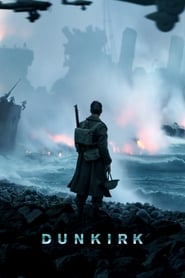
Another of last year's crowded field of hopefuls that lost out to The Shape of Water.
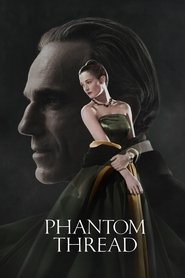
Same crowded, ultimately unsuccessful field from last year.
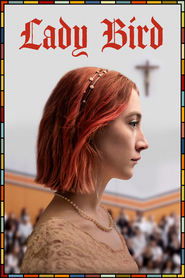
Same, one of last year's internet favorites that came up short.
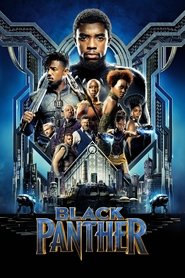
One of this year's spoilers alongside BlacKkKlansman and A Star Is Born.
Same, part of this year's spoiler field to Roma.
Same, the film Sean is hoping squeaks out a Best Picture win.
Sean and Amanda's guess for Kate Middleton's favorite film of 2018, in a bit riffing on the royals' awkward, silent entrance at the ceremony.
Stock Up, Stock Down: Bradley Cooper's Campaign
Sean Penn published a full-throated Deadline essay defending the film and Bradley Cooper's direction after Cooper was snubbed for Best Director; Paul Schrader wrote a similar note to IndieWire. The hosts are skeptical the late campaign will move voters.
The Sam Elliott vehicle he's doing press for this week, which the hosts fold into their case that Elliott doesn't need an extra Best Supporting Actor push. Everyone already loves him.
Stock Up, Stock Down: The Oscar Telecastcinematography, editing, live action short, and makeup and hairstyling get cut from the broadcast
The hosts' go-to example of why the show shouldn't cut makeup and hairstyling: "there is no Vice without makeup and hairstyling."
Cited as proof cutting categories isn't necessary to draw a huge audience: it won Best Picture (and gave out Best Live Action Short) in front of 55 million viewers.
The Big Race: Best Original Screenplaythe Oscars' consolation-prize category
Nominee (Deborah Davis and Tony McNamara) and the favorite, one of the more inventive, thoughtful, less mechanical movies of the season.
Nominee, Paul Schrader, the hosts' shared "problematic fave."
Nominee (Nick Vallelonga, Brian Currie, Peter Farrelly), and the hosts' pick to upset The Favourite.
Nominee, Alfonso Cuarón.
Nominee, Adam McKay.
Jordan Peele's win last year, the hosts' example of this category as a consolation prize: it went on to win nothing else that season.
Sofia Coppola's win, cited as "my queen" proof of the category's taste.
Callie Khouri's win, one of the category's classic picks the hosts rattle off.
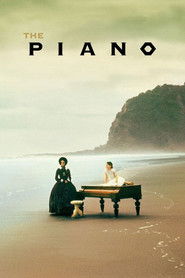
Jane Campion's win, same rundown.
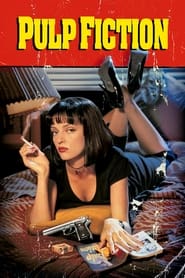
Quentin Tarantino and Roger Avary's win, same rundown.
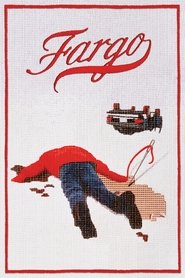
The Coen brothers' win, one of the rare times this category's winner also took Best Picture.
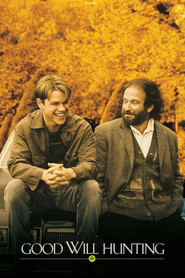
Ben Affleck and Matt Damon's famous win, same rundown.
Julian Fellowes's win, same rundown.
Charlie Kaufman's Oscar, same rundown.
Listed among the category's past honorees without further comment.
Same.
Same.
The other rare case, with Fargo, of an Original Screenplay winner that also took Best Picture.
The Big Race: Best Adapted Screenplay
The Coens' anthology film qualifies here on a technicality: four of its six segments are wholly original, only two based on short stories (Jack London's "All Gold Canyon" and Stewart Edward White's "The Gal Who Got Rattled").
Spike Lee, David Rabinowitz, Charlie Wachtel, and Kevin Willmott's script, based on Ron Stallworth's memoir; the hosts peg it the frontrunner, mostly as a make-good for Lee's career.
Nicole Holofcener and Jeff Whitty's script, based on Lee Israel's memoir; Amanda says Holofcener's body of work belongs in the Smithsonian.
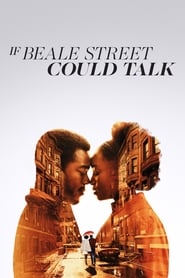
Barry Jenkins's script, based on James Baldwin's novel; the hosts wonder if it's getting overshadowed because Jenkins already won this category for Moonlight.
Bradley Cooper, Will Fetters, and Eric Roth's script, credited to the 1954 and 1976 films before it. Amanda calls it "a stew of three previous films" that still counts as a real adaptation.
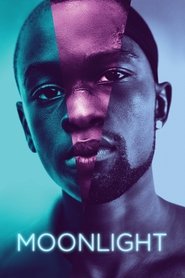
Jenkins and Tarell Alvin McCraney's prior Adapted Screenplay win, the reason the hosts think Beale Street isn't getting more attention here.
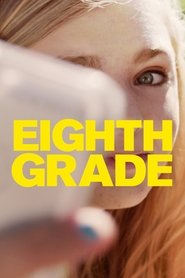
Not an Oscar nominee, but nominated for Original Screenplay at the Writers Guild Awards, which run on different eligibility rules.
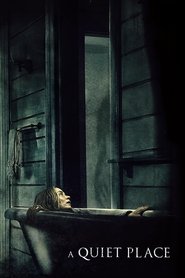
Same WGA Original Screenplay nod; Sean wants to see the shooting script given how little dialogue the film has.
Nominated for Adapted Screenplay at the WGA, not the Oscars; the hosts wonder if older Oscar voters are simply less familiar with Ryan Coogler's work.
In Conversationthe Beale Street and Moonlight composer on scoring, Succession, and the pipe organ
Britell's second Oscar nomination, after Moonlight; he and Barry Jenkins built the score around the sound of cellos to represent the film's several kinds of love.
Britell's first Oscar nomination; he later published three pieces from the score, including "Little's Theme" and "Middle of the World."
Vangelis's score is Britell's earliest film-music memory: he saw the film at five and asked for piano lessons because of it.
Elmer Bernstein's score, which Britell says he loved as a kid as much as Mozart's Jupiter Symphony.
Danny Elfman's score, which Britell cites in his running complaint that most film scores never get their sheet music published.
Adam Leon's feature debut and Britell's first scored indie feature to get real distribution: it played Cannes and won at SXSW.
A $10,000 feature his college friend Nick Lavelle made, the first film Britell ever scored; it never got released.
Britell singles out Anna Meredith's score as one he admires, "so woven into that universe" that he couldn't imagine the film without it.
Britell's answer to the show's closing question about the last great thing he's seen; he met Alfonso Cuarón the same day and says he was "just stammering."
The Cuarón film Britell told Cuarón he thinks about every day, on meeting him.
Also mentioned raised along the way
In passing North by NorthwestCasablanca
Not films filtered out: TV, games, ads
TV Succession
Ads Bud Light